
Author: Brandy Sundberg, MHPTT, RT(R), RDMS
Over the years working alongside healthcare professionals, I’ve come to deeply appreciate the level of presence this work requires. Each day asks for careful attention, steady hands, and the ability to remain calm and focused in moments that matter greatly to patients and families.
What is often less visible, however, is the load that healthcare professionals themselves carry: the physical demands, the constant cognitive focus, and the quiet emotional weight of responsibility. These experiences accumulate in ways we don’t always notice, yet our nervous system is continuously responding to them.
The Unseen Load
Each day requires focused attention, quick decision-making, and the ability to remain steady under pressure.
And while the work is deeply meaningful, it also carries an unseen load:
- The physical demands of clinical work
- The cognitive intensity of interpreting complex information
- The emotional weight of responsibility for human lives
Much of this remains invisible to patients, and often to colleagues as well, but the body registers it all.
Our nervous system is constantly responding to the environments we move through, the pressures and the responsibilities we carry. Over time, these demands influence everything from focus and sleep to overall wellbeing.
Recognizing this is not about adding one more task to an already full day. It’s about understanding that the same science we rely on to care for patients also applies to caring for ourselves.
When I work with healthcare teams, I often ask a simple question: “How many of you struggle with sleep?” More often than not, most of the room raises their hand.

Each day requires focused attention, quick decision-making, and the ability to remain steady under pressure.
What Stress Does to the Body
When we encounter prolonged demands or pressures, the body activates a protective response designed for survival.
The sympathetic nervous system, often referred to as the fight-or-flight response, increases heart rate, raises blood pressure, and releases stress hormones such as cortisol and adrenaline.
In short bursts, this response is incredibly helpful. It sharpens attention and mobilizes energy for action. But when activation remains elevated for long periods of time, the body has fewer opportunities to return to a restorative state supported by the parasympathetic nervous system.
This restorative state is where the body performs essential maintenance-repairing tissue, regulating inflammation, and restoring cardiovascular balance.
Without moments of recovery, the nervous system can remain in a more prolonged state of activation. Over time, this can contribute to fatigue, tension in the body, disrupted sleep, and a sense of always being “on.”
And in healthcare, it can often feel like there isn’t enough time to pause when schedules are full and the demands are constant.
Even with these demands, the nervous system remains remarkably responsive and brief pauses can begin to restore balance.
Stress Is Also Relational
Stress does not only affect the body, it also shapes how we connect with others. This can make it harder to stay patient and present.
In a demanding healthcare environment, this can subtly influence communication, teamwork, and the sense of connection that supports both patients and colleagues.
Small moments of regulation throughout the day can help restore the nervous system’s capacity for presence, clarity, and connection.
The Power of Micro-Moments
One common misconception about stress recovery is that it requires large blocks of time. In reality, the nervous system responds strongly to short, intentional resets throughout the day.
These micro-moments help shift the body toward parasympathetic activity, which is the state associated with restoration and recovery.
Here are a few simple examples that can fit naturally into a clinical day.
A Breath Reset
- Before entering the next patient room, pause for three slow breaths.
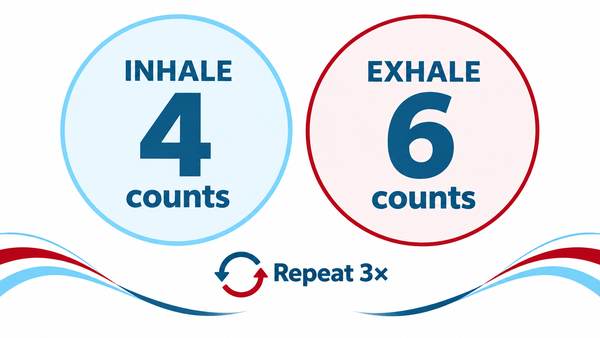
- Inhale gently through the nose (try counting to 4 as you inhale)
- Pause at the top.
- Allow the exhale to be slightly longer (try counting to 6 as you exhale)
- Pause at the bottom.
- Repeat 3 times.
- Longer exhales signal the body that it is safe to begin settling. Even 20–30 seconds can begin to shift how you feel.
A Movement Reset
Clinical work often involves prolonged postures: standing, leaning, or holding the arm in abduction.
Small movements can release accumulated tension and provide a subtle nervous system reset.
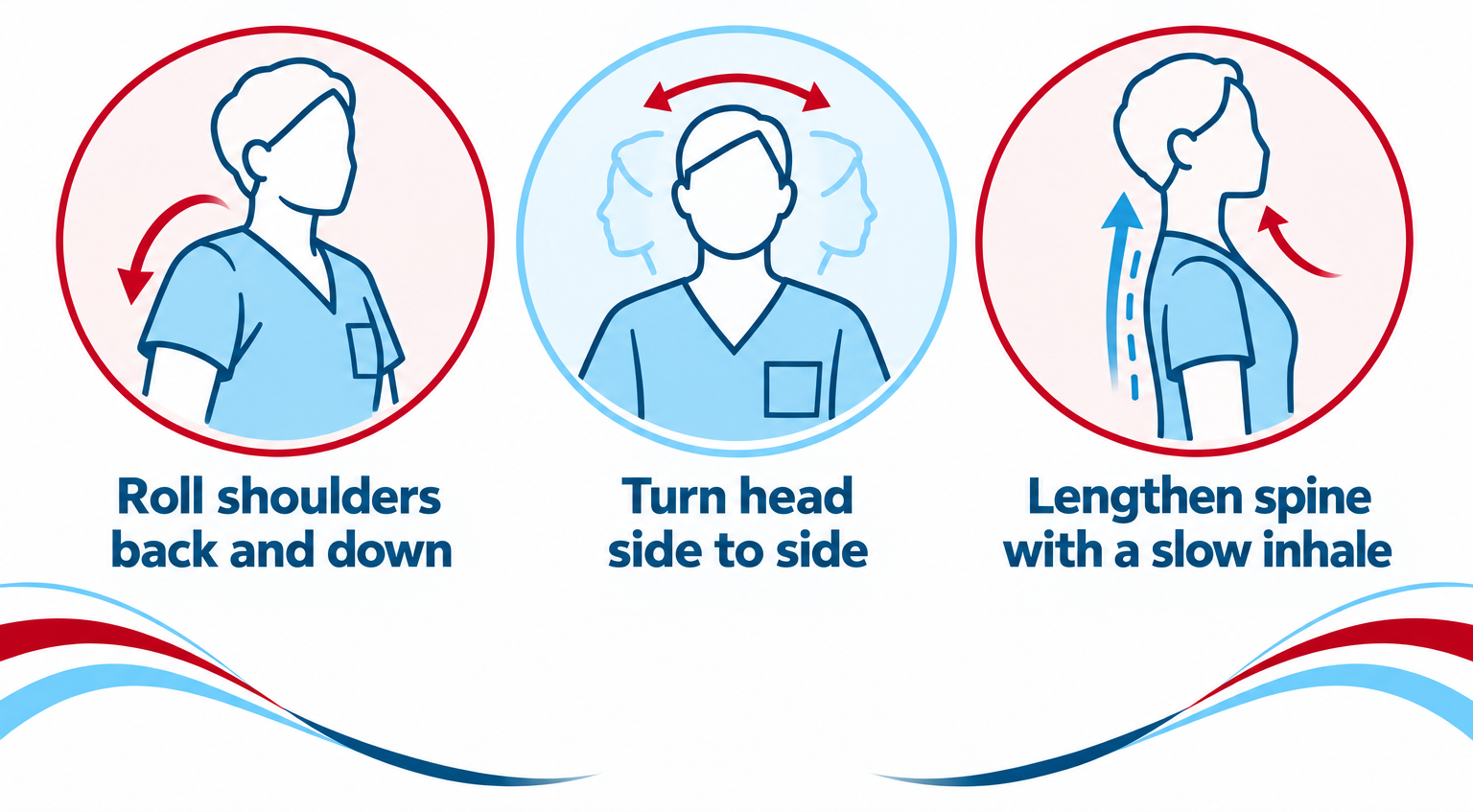
Between patients, try:
- rolling the shoulders slowly back and down
- gently turning the head side to side
- lengthening through the spine with a slow inhale
Caring for the System That Cares for Others
We care for the health of others, yet the same responses exist within us. The nervous system responds to both demand and recovery; not through dramatic changes but small, consistent shifts.
A breath between patients.
A moment of movement.
A brief return to the present moment.
These simple practices are not luxuries.
They support the system that allows us to continue this meaningful work, and to show up for both our patients and our lives beyond it.
For healthcare professionals who spend their days caring for others, these small moments of restoration are not indulgent, they are essential. Caring for the heart of healthcare begins with caring for the people who make that care possible.
And sometimes, the most powerful reset begins with just one breath.
About Brandy

Brandy Sundberg, MHPTT, RT(R), RDMS, brings over 20 years of experience as a sonographer and educator. She is an Assistant Professor at the University of Nebraska Medical Center, Director of Imaging in Maternal-Fetal Medicine, and a certified yoga and mindfulness instructor. Through her work, she supports healthcare professionals, elite military teams, and her local community in reducing burnout and building resilience in high-stress environments.
👉 Learn more at https://www.calmstrongeducation.com/health