
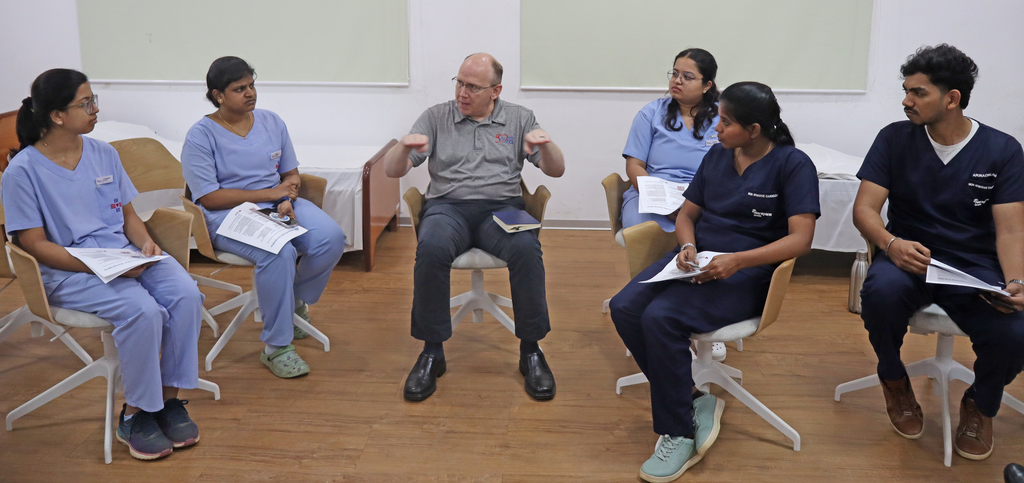
Of all the people I have had the privilege of meeting during my travels this year, perhaps none have inspired me more than the students preparing to enter our profession.
Over the past several months, I have traveled nearly 30,000 miles across multiple continents, meeting cardiovascular professionals at every stage of their careers. I have spoken with educators, clinicians, researchers, administrators, and leaders from around the world.
Yet some of the most memorable conversations have been with students standing at the very beginning of their professional journey. I often see the same look in their eyes: curiosity.
Students want to understand how things work. They want to know why a procedure is performed a certain way. They want to learn the science, master the technology, and ultimately improve the lives of others. Their questions remind me that every expert in our profession was once a student standing where they stand today.
Cardiovascular science is one of the most dynamic and rapidly evolving professions in healthcare. The technologies available to today’s students would have been unimaginable just a generation ago. New imaging modalities, structural heart interventions, electrophysiology procedures, and data-driven technologies continue to transform patient care at an extraordinary pace.

“While the tools may change, one truth remains constant: the profession needs curious people.”
Technical knowledge is important, but curiosity is what drives lifelong growth. The most accomplished professionals I have met are not distinguished by knowing all the answers. They are distinguished by their willingness to continue asking questions.
As students, you are entering a profession built upon a remarkable partnership between educators, professional societies, and credentialing organizations. Together, these groups form the foundation that supports professional growth and excellence throughout a career. Each plays a unique role in preparing the next generation of cardiovascular professionals to meet increasingly complex clinical demands.
Yet your success will depend on more than the resources available to you. It will depend upon your commitment to learning.
Seek mentors. Ask questions. Embrace challenges. Volunteer for opportunities that stretch your abilities. Attend professional meetings. Introduce yourself to people whose careers you admire. The conversation that feels uncomfortable today may become the professional relationship that helps shape your future tomorrow.
“… your success will depend on more than the resources available to you. It will depend upon your commitment to learning.”
One of the most encouraging observations from my travels has been the realization that students around the world share the same aspirations. Whether in North America, Europe, Asia, the Middle East, or elsewhere, I met individuals driven by a desire to make meaningful contributions to patient care and improve the health of their communities.
The future of cardiovascular science is not being built in boardrooms or conference halls alone. It is being built in classrooms, simulation laboratories, clinical rotations, and study groups. It is being built by students who choose to invest in themselves and their future patients every single day.
As you move forward in your journey, remember that education is not a destination. Graduation is not the finish line. Credentialing is not the end of learning. In many ways, they are only the beginning.
There will always be a new technology to understand, a new therapy to master, a new perspective to consider, and a new colleague from whom you can learn. The strongest professionals never stop being students.
One day, you will become the mentor, educator, and leader that someone else looks to for guidance. When that time comes, remember those who invested in you. Share your knowledge freely. Encourage curiosity in others. Create opportunities for those following behind you.
The seeds of our profession’s future are already being planted. They are planted every time a student chooses to learn, a teacher chooses to teach, and a mentor chooses to invest in someone else’s success.
“To the students reading this: thank you.”
Your energy, curiosity, and commitment give me tremendous confidence in the future of cardiovascular science. The profession needs you. The patients we serve need you. Most importantly, the next generation that will follow you needs the example you are setting today.
Keep learning. Keep asking questions. Keep growing.
Your journey is just beginning.
– Travis Nay, BS, RCIS, AACC, CCI President